 Svenesis.org
Blog
Articles on the topics of this site – 🖥️ Technology, 📈 Finance, and 🔭 Astronomy.
21 September 2026 · 🔭 Astronomy 🖥️ Technology
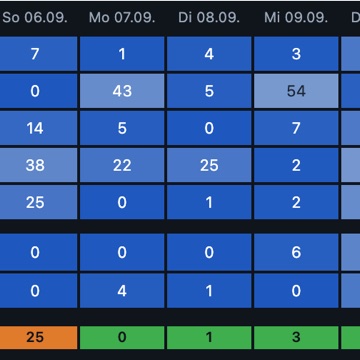
How good was the forecast? I checked up on my own astro weather
60 nights at four locations recounted: what the astro weather said one to five days ahead and what came of it. Why there is no single reality, why a forecast is only ever good at whatever is common anyway – and why the one-day forecast in Texas is worse than the three-day one.
18 September 2026 · 🔭 Astronomy 🖥️ Technology
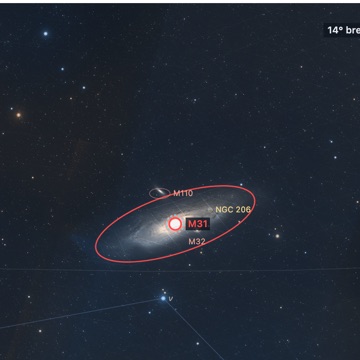
The observing planner: 13,600 objects, an interactive star map, and whether one person can really get this accurate
After Astro Weather, the other half of the planning: an interactive star map with sky photographs, catalogues from Messier to Sharpless, passes and eclipses – and 120 checks against USNO, JPL and NASA. Yes, it happened with Claude – which is exactly why the checks were needed.
18 September 2026 · 🔭 Astronomy 🖥️ Technology
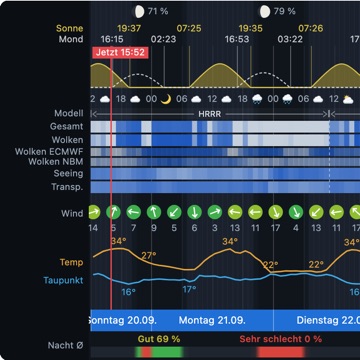
Is tonight worth it? My Astro Weather page – and where every number in it comes from
Seven days at a glance, made for the one question before every night. Which models deliver the numbers – ICON, GFS, HRRR, ECMWF, CAMS –, which three rows the tool estimates itself, and what the page gives away about you.
17 August 2026 · 🔭 Astronomy
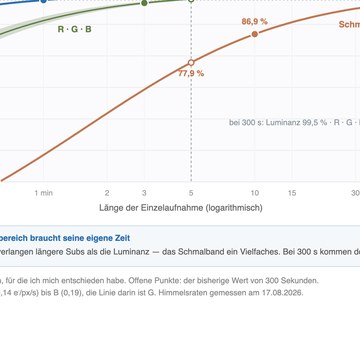
Why have I been shooting 300 seconds all this time? – the optimal sub length, measured and calculated
Read noise and sky rate measured rather than estimated – and the answer is that a single sub length for every filter is wrong. 60 s for luminance, 180 s for RGB, 600 s in narrowband.
13 August 2026 · 🔭 Astronomy
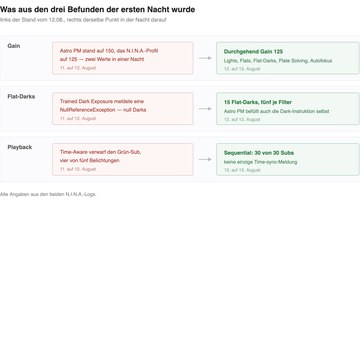
Thirty out of thirty – the second night with Astro PM
M16 in narrowband, 30 of 30 subs, 15 flats and 15 flat-darks – and the first meridian flip inside the Astro PM container. What became of the three findings from the first night, and why one of my explanations is obsolete.
12 August 2026 · 🔭 Astronomy
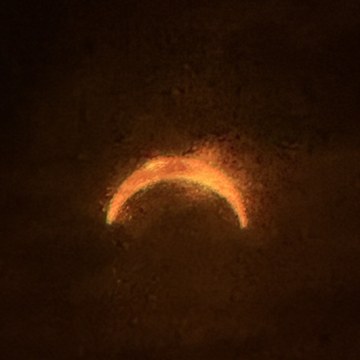
Seven degrees above the sea – the solar eclipse from the beach at Tversted
83.5 per cent covered and only 7.5 degrees above the horizon: the partial solar eclipse of 12 August 2026, seen from the beach on the Danish Skagerrak coast – with a map, a simulation and three phone photographs through cardboard glasses.
12 August 2026 · 🔭 Astronomy
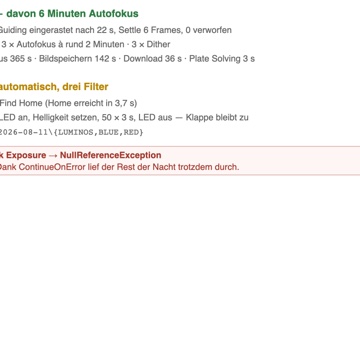
The first session with Astro PM – and the three things that went wrong
First unattended run across 8,500 kilometres: 4 lights, 150 flats, zero flat-darks. A wrong gain out of the cloud, a green sub that Time-Aware threw away, and an empty dropdown that cost the darks.
11 August 2026 · 🔭 Astronomy
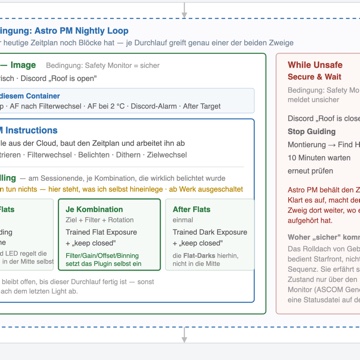
Five minutes to an answer, one night to a feature – my start with Astro PM
A planning workbench that takes the targets out of the sequence file: Astro PM in an ARM VM on the MacBook, a Discord question answered in five minutes – and a flat handling whose logic was better than mine.
11 August 2026 · 🔭 Astronomy
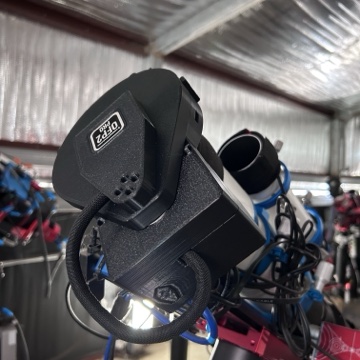
A lid that lights up – the OFP2 PRO in Texas and my first set of flats
Eleven days from Slovenia to Texas, ten minutes to the first flat – and behind it the arithmetic: why Dynamic Brightness turns seven calibration series into one, why three seconds is the minimum, and why 50 flats but only 10 flat-darks would do.
7 August 2026 · 🔭 Astronomy
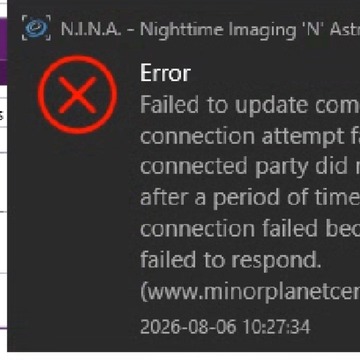
When the N.I.N.A. Orbitals Plugin Stops Loading MPC Comet Data
Over 900 telescopes behind one IP address, a twelve-hour download block at the Minor Planet Center – and a plugin that never saves the text file. Why the obvious fixes do not work, and a script that produces the binary file instead.
7 August 2026 · 🔭 Astronomy
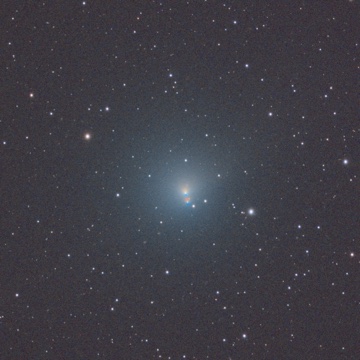
Second attempt at 10P/Tempel 2 – and this time it is in the frame
Nineteen degrees off was yesterday. This time the coordinates went into the Framing Assistant by hand, straight from JPL Horizons – followed by a 900-second frame in which every star is a dash and only the comet is a point.
6 August 2026 · 🔭 Astronomy
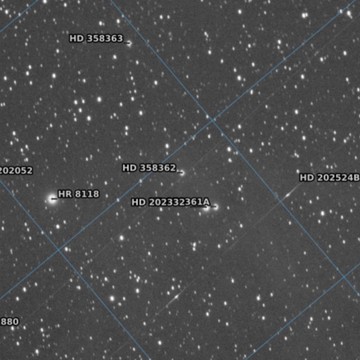
My First Comet with the N.I.N.A. Orbitals Plugin – and Why I Was 19 Degrees Off
10P/Tempel 2 at perihelion, the Orbitals plugin in N.I.N.A. – and a night of frames of a patch of sky the comet was never in. Four mistakes, and the costliest one never raised a single error message.
5 August 2026 · 🔭 Astronomy
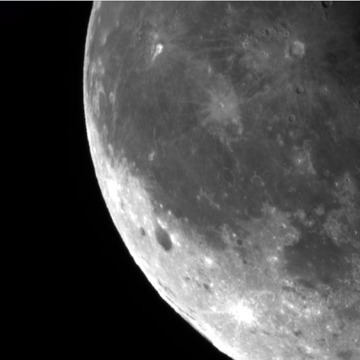
A Falcon 9 Upper Stage Hits the Moon – and I Film Absolutely Nothing
4.9 tonnes of rocket stage strike the Moon near the crater Einstein. I recorded it from Denmark with my rig in Texas: 208 GB in 20 minutes, no flash, no dust plume – but I did learn SharpCap.
3 August 2026 · 🔭 Astronomy
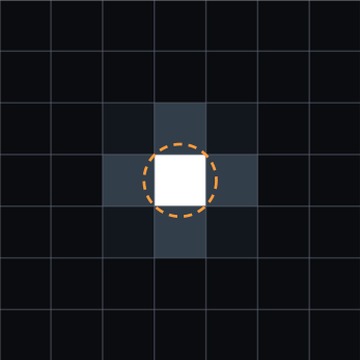
Does My Camera Actually Suit My Telescope? Over- and Undersampling – and What Drizzle Really Gives You
Pixel size divided by focal length takes ten seconds – how wide the stars actually arrive is decided anew every night. Two 15-second frames, four measuring methods, one unambiguous result: 1.6 to 1.7 pixels per star width.
30 July 2026 · 🔭 Astronomy
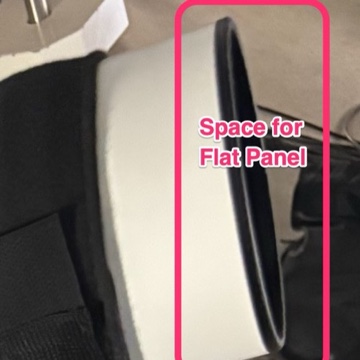
Flats, Darks, Bias – Calibration, and Why I Really Want a Motorised Flat Panel
A raw frame never shows just the sky. What bias, dark, flat and flat-dark frames measure, which of them really matters on my CMOS camera – and why a remote rig cannot take calibration frames at all without a motorised panel.
29 July 2026 · 🔭 Astronomy
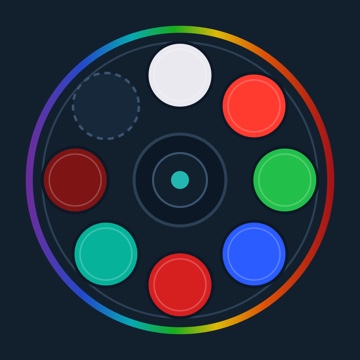
Mono Camera, Filter Wheel and My Filters – Which Light I Collect
A mono sensor sees no colour – and that is exactly why it sees more. What separates LRGB from narrowband, which filter suits which target, and how two exposures become an HOO image of SH2-129.
29 July 2026 · 🔭 Astronomy
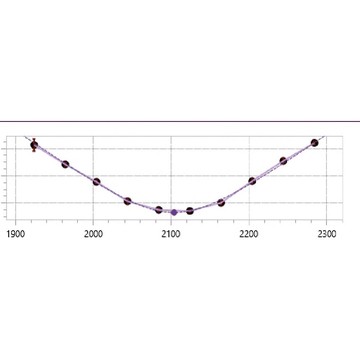
Autofocus in N.I.N.A. – and What Hocus Focus Does Better
Over the course of a night the focus point drifts with the temperature, and on a mono camera every filter change adds an offset of its own. How N.I.N.A. walks the V-curve, what the Hocus Focus plugin adds on top – and why an inherited 4-second exposure was far too short for narrowband.
July 28, 2026 · 🔭 Astronomy
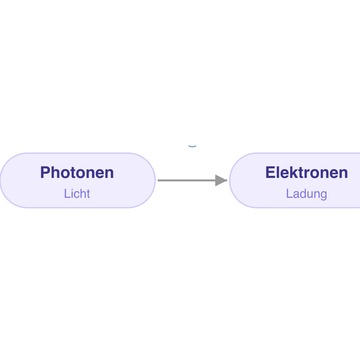
How My CMOS Mono Astro Camera Works – From Photon to Number
Light becomes charge, charge becomes voltage, voltage becomes a number – and each of those three conversions has one of the dials I turn at night sitting on it. Why two of the three classic noise sources barely matter on a cooled low-noise camera, and what decides the image instead.
July 28, 2026 · 🔭 Astronomy
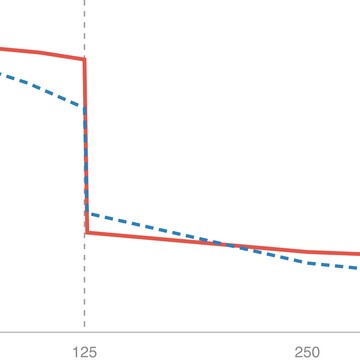
Gain and Offset – What the Two Camera Dials Really Do
More gain doesn't mean more light – it only turns up the volume. Why read noise on the IMX533 drops abruptly at gain 125 of all places, why dynamic range survives almost intact, and how to read the offset off your own histogram instead of guessing it.
July 28, 2026 · 🔭 Astronomy
Dithering – Why I Deliberately Shake My Telescope
You spend nights building a setup so that nothing wobbles – and then shift the telescope on purpose between frames. Why that makes hot pixels and the dreaded walking-noise trails disappear, and the values that make N.I.N.A. and PHD2 work together.
July 27, 2026 · 🔭 Astronomy
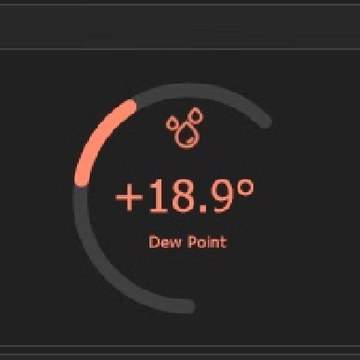
Dew on the Telescope – What the Dew Point Really Means and When I Have to Act
No alarm, no dramatic failure – the stars simply go soft. Why the optics fog up sooner than humidity suggests, how the buffer melts from 8.5 to 1.0 K over one night, and how I know the dew heater is really heating.
July 26, 2026 · 🔭 Astronomy
The Forgotten Meridian Flip – How a Single Checkbox Cost Me Two Exposures
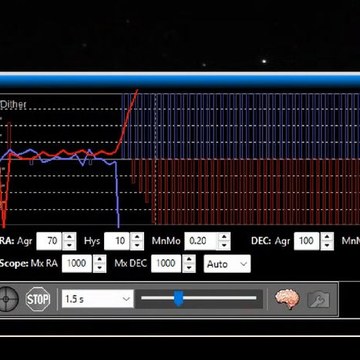
PHD2 in full alarm, the tracking error no longer in arcseconds but in hundreds of them, and moments later the guide star gone. The panic window suggested a guiding collapse – the log told a completely different story. The cause was one unchecked box, the damage two exposures.
July 26, 2026 · 🔭 Astronomy 🖥️ Technology
The Thought Came to Me in Bed – A Sunday with Somebody Else's Siril Code
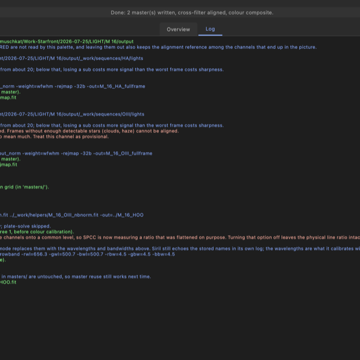
One evening in bed it struck me that a Siril developer had written a similar script. While Sh2-129 was being exposed in Texas, I spent Sunday morning reading it – and then 25 more. Not to copy anything, but to see how other people solve the same problems. The biggest gain turned out to be something I didn't adopt at all.
July 25, 2026 · 🔭 Astronomy 🖥️ Technology
Seven Filters, One Button – How I Learned Mono Image Processing by Writing My Own Siril Script
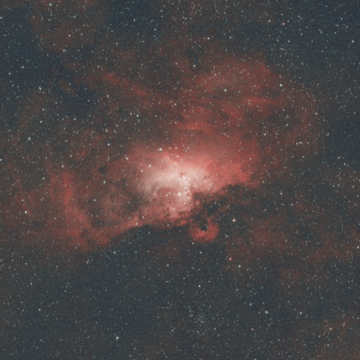
From a Seestar to a seven-filter wheel: a mono camera doesn't hand you one dataset, it hands you seven – and suddenly image processing is an evening full of clicking. Why I'd rather build a 7,000-line script instead – and learned more doing it than from any tutorial.
July 23, 2026 · 🔭 Astronomy 🖥️ Technology
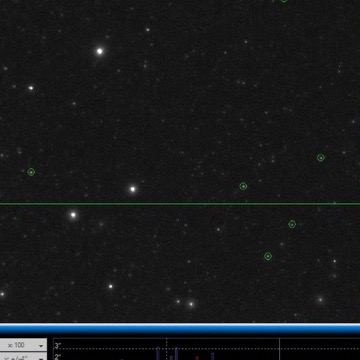
A Lost Guide Star in PHD2, an AI, and the Truth in Between
While tuning the telescope guiding, Claude helped me out – not by knowing everything, but by getting it wrong twice. An honest field report on screenshots as diagnosis, plausible false conclusions, and the path from nearly seven down to 0.61 arcseconds.
July 23, 2026 · 🔭 Astronomy
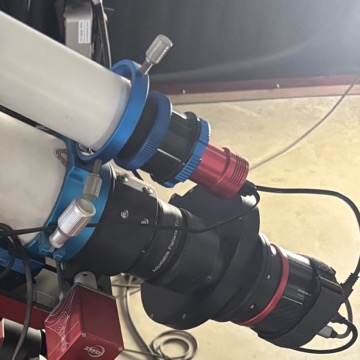
8,500 Kilometers to a Better Sky – How I Bought My Remote Rig in Texas
The sky over Germany is not a revelation – so I found myself a different one: a used turnkey rig at Starfront Observatories under Bortle 1 skies in Texas, bought from my sofa via Discord. Why that wasn't such a crazy idea, everything you inherit when you take over someone else's system – and how the guiding ended up at 0.61″.