 Svenesis.org
12 August 2026 · 🔭 Astronomy
Seven degrees above the sea – the solar eclipse from the beach at Tversted
Usually I look through a telescope 8,500 kilometres away. This evening I stood in the sand at Tversted on the Danish Skagerrak coast with my family, looking up through a pair of cardboard glasses.
It was better.
19:06
first contact
20:00
maximum, 83.5 % covered
20:52
last contact
Where this was
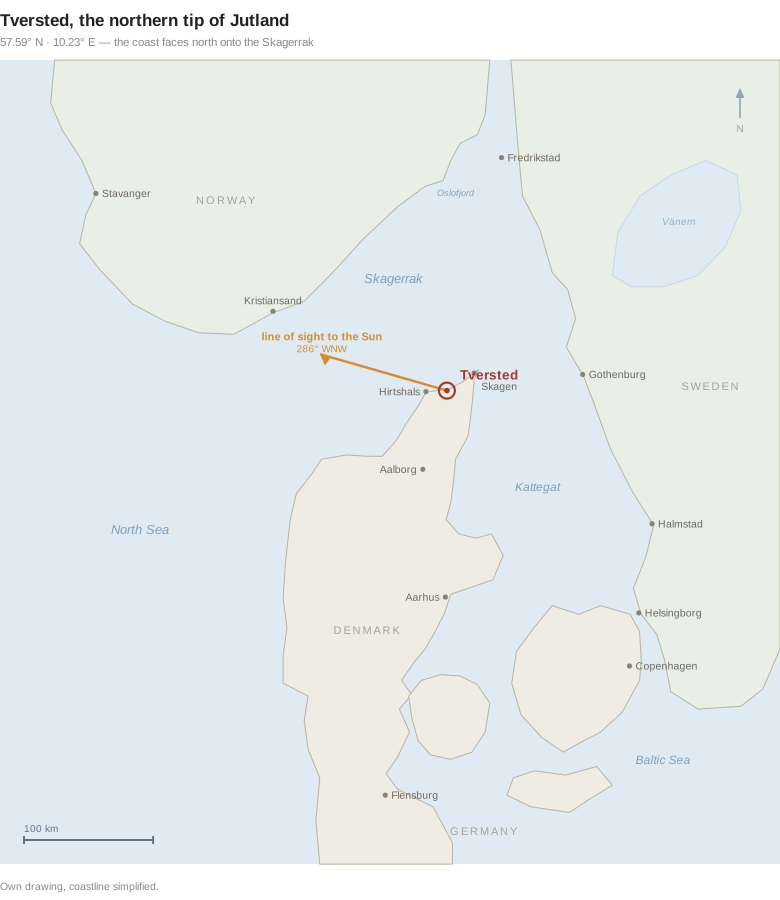
Worked out beforehand
I built this simulation to prepare my family for the eclipse.
The number that matters in it is not the obscuration but the altitude: 7.5 degrees. That is how low the Sun stood at maximum. Which is exactly why the beach was the right place – a line of trees or a dune to the west would have been enough to cost us the whole evening. By last contact at 20:52 the Sun was still one degree above the horizon; a quarter of an hour later it set.
What there was to see
The eclipse began at 19:06 and ended at 20:52. At the 20:00 maximum, 83.5 per cent of the Sun's disc was covered by the Moon.
Thin cloud drifted through all evening, and a few times it looked as though nothing would come of it. The crucial half hour around maximum happened to be clear. That was luck, not planning.
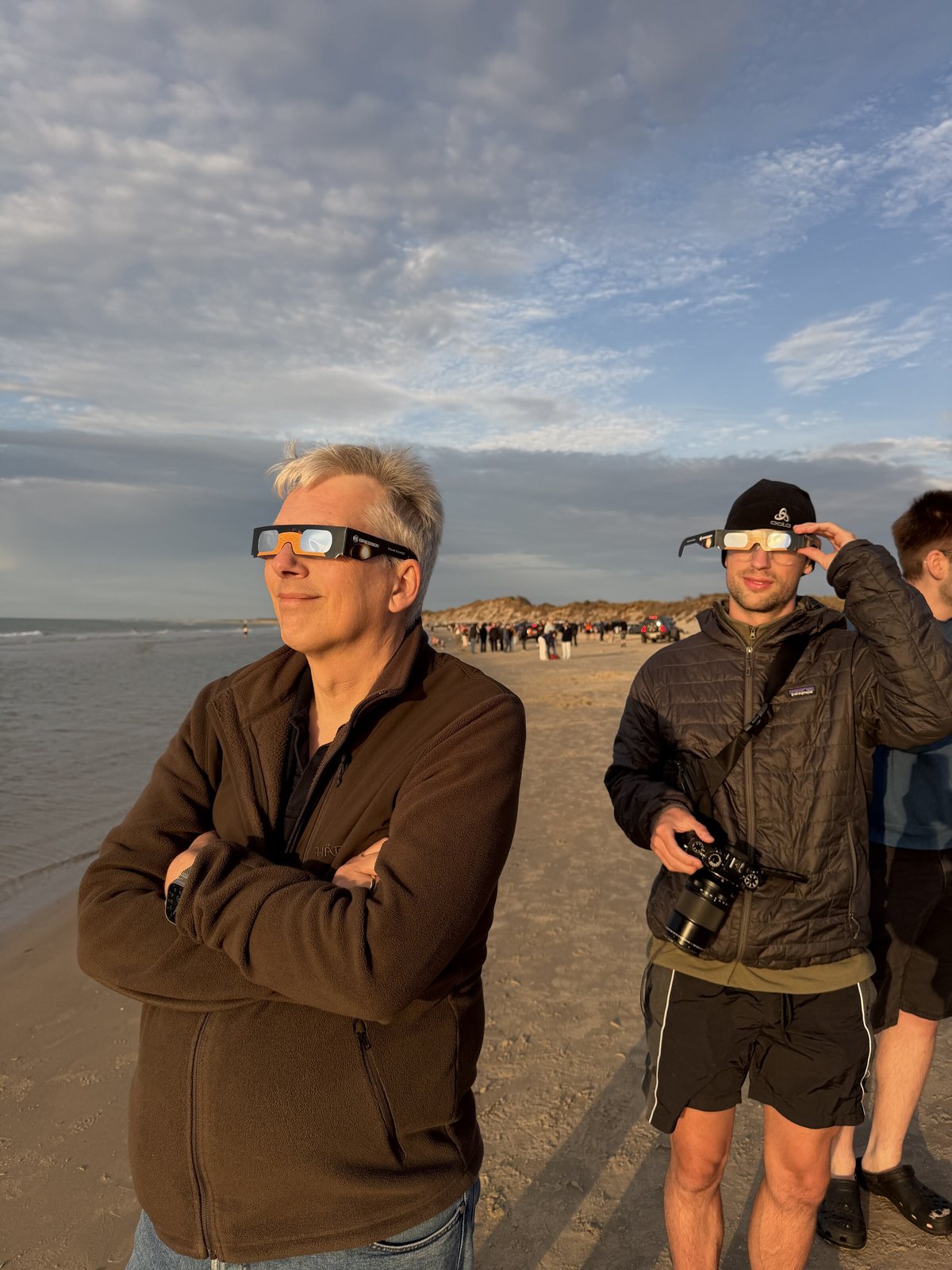
Incidentally, at 83 per cent it does not go dark. What is left of the Sun is still far too bright to look at, and the eye compensates for almost all the rest. The photograph shows it well: a warm summer evening by the sea, three minutes after maximum. Without the glasses you would barely have noticed the difference.
The photographs
I took the photographs with my phone at five times zoom and the Bresser eclipse glasses simply held in front of the lens. That is not technique, it is improvisation – and it is exactly why it works: the filter sits in front of the objective, so the phone sees the Sun and nothing else.
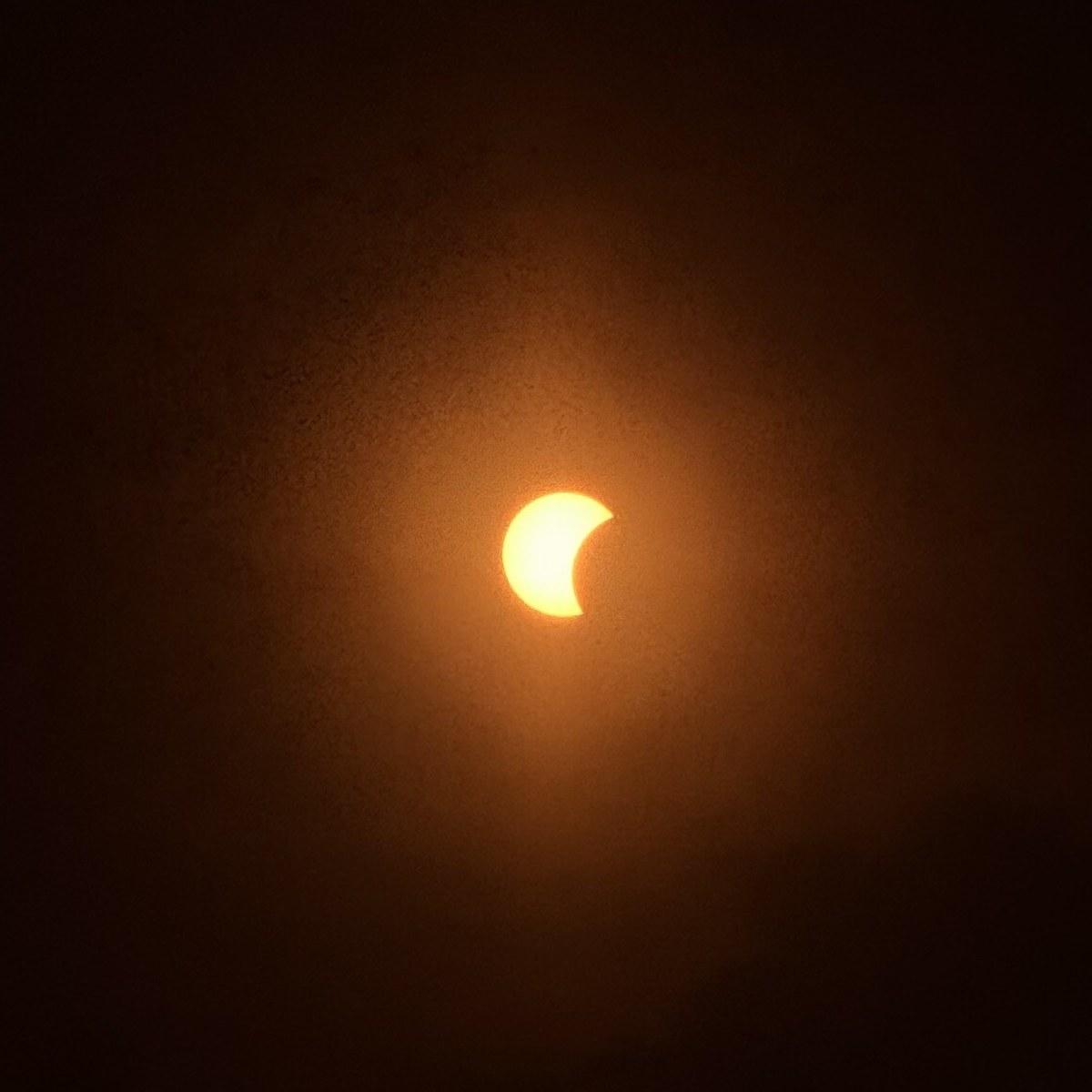
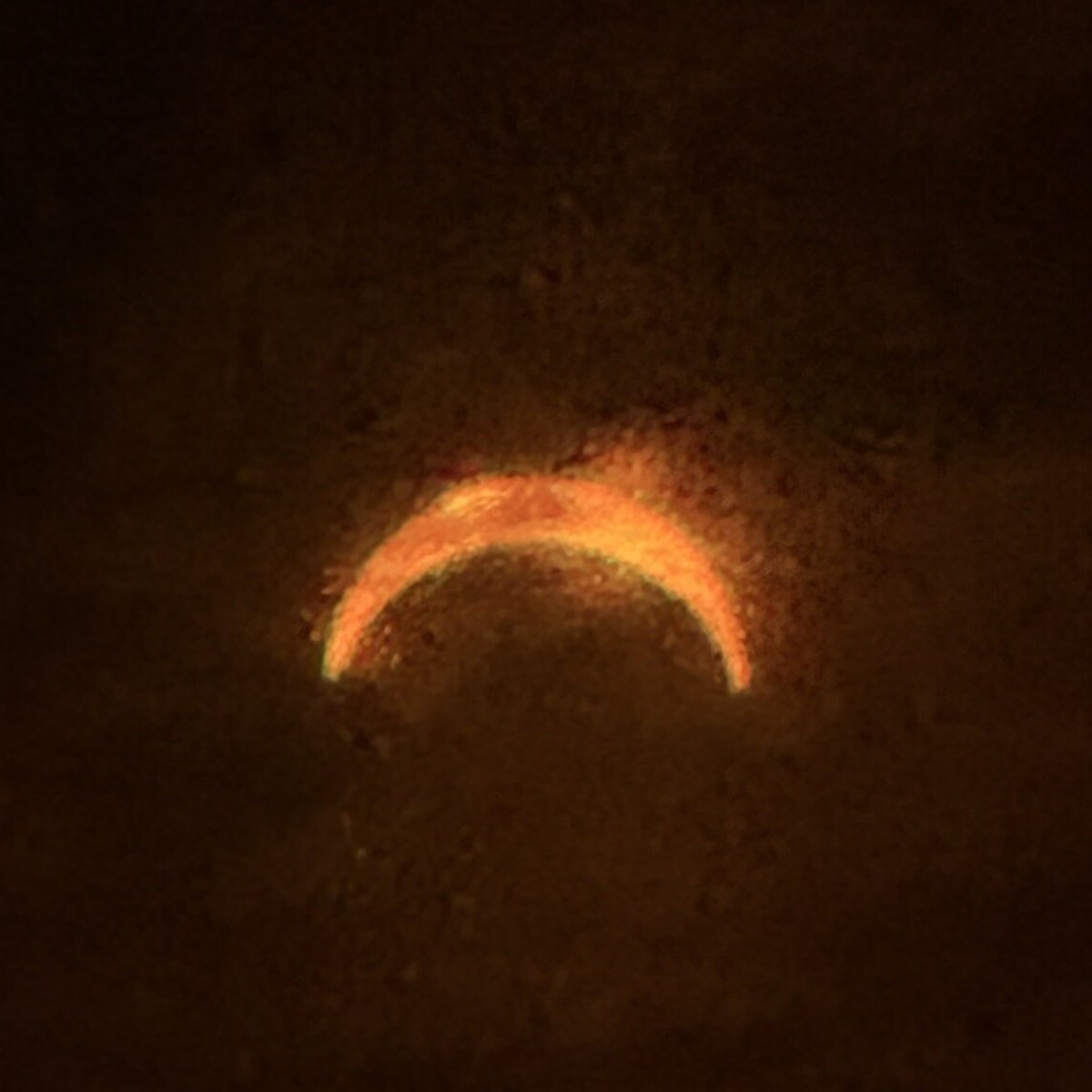
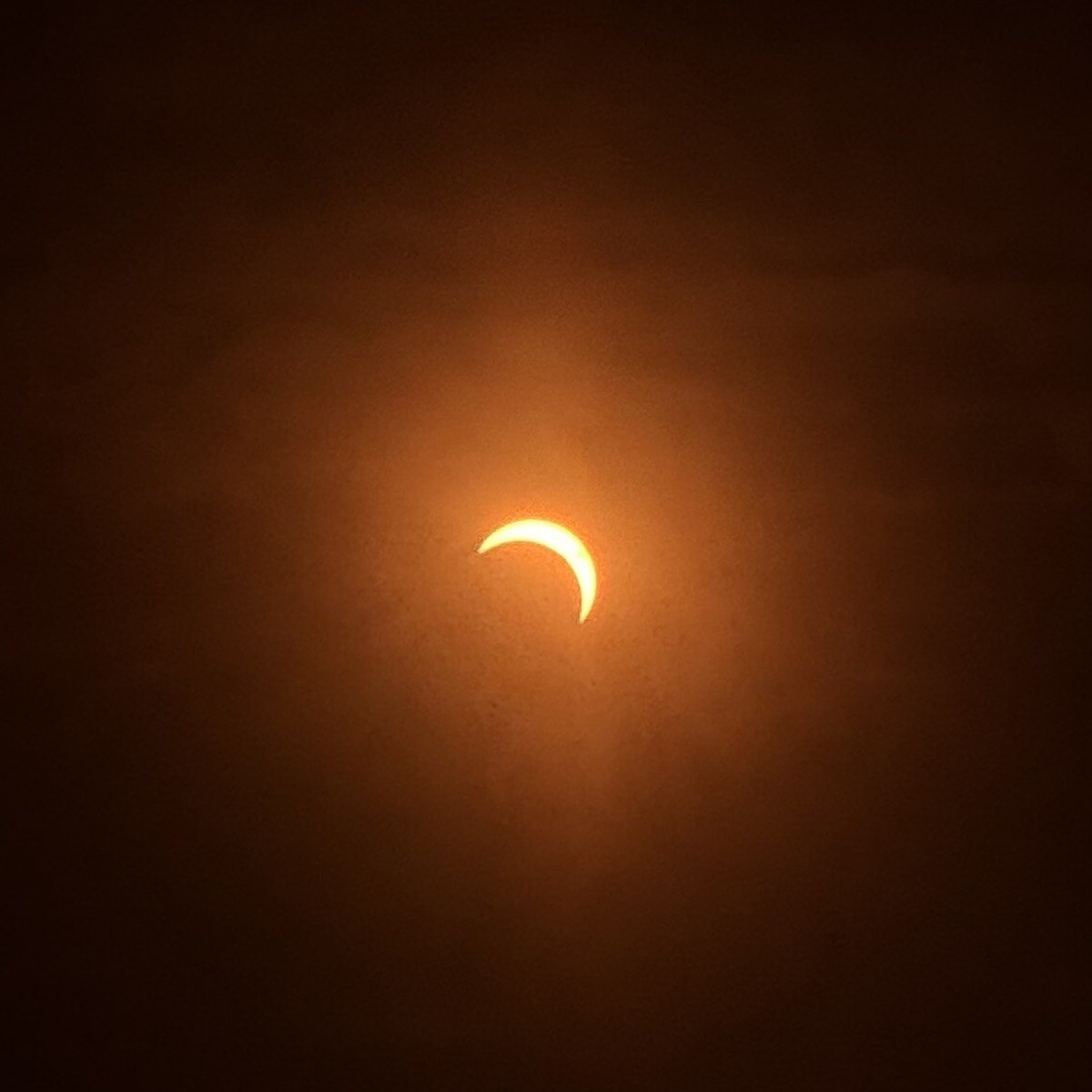
Photographs of this kind follow the same rule as looking does: never without a filter, and the filter belongs in front of the optics, not behind them. A phone will forgive you; an eye will not.
Totality itself passed elsewhere – over north-east Greenland, then western Iceland, and a few minutes after our maximum over northern Spain. There the Sun was gone completely for about a minute and a half. Here it was a crescent over the water, with children next to me taking their glasses off every few minutes to check whether you can see it without them after all.
You cannot.
🔭 The contrast, on the very same night: The first session with Astro PM → · The rig that ran on its own while I was away: My rig @ Starfront in Texas · My images: Astro Image Showcase